









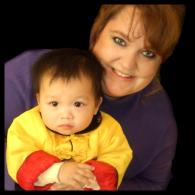
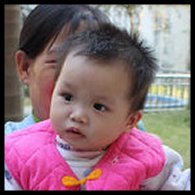
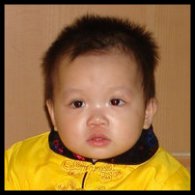

 Lately, we're struggling with control issues. When G's bottle is empty and I pull if from her mouth she flips out. I believe she thinks that the bottle is NOT empty and I am taking it away from her. So, I've decided to let her feed herself the bottle. I was trying to show her how to hold the bottle upward so that it was easier to drink. G had a different plan. She keeps the bottle practically vertical and literally su.cks all the milk out, sometimes turning the liner inside out. When it's COMPLETELY empty just either tosses the bottle or hands it to me and is completely satisfied that "it" is really empty and she is full. Geesh!! We still keep total eye contact but I am not sure if this is good or not!
Showing posts with label Attachment. Show all posts
Showing posts with label Attachment. Show all posts
Control Issues
Lately, we're struggling with control issues. When G's bottle is empty and I pull if from her mouth she flips out. I believe she thinks that the bottle is NOT empty and I am taking it away from her. So, I've decided to let her feed herself the bottle. I was trying to show her how to hold the bottle upward so that it was easier to drink. G had a different plan. She keeps the bottle practically vertical and literally su.cks all the milk out, sometimes turning the liner inside out. When it's COMPLETELY empty just either tosses the bottle or hands it to me and is completely satisfied that "it" is really empty and she is full. Geesh!! We still keep total eye contact but I am not sure if this is good or not!
What to Expect When Adopting......
While over at Alyson's Blog, I read a very helpful article. I definately agree Alyson! This artical is from Amy Eldridge, from Love without Boundaries. I hope that you all will read this. Thanks.
Friends and Family- Please read this.
What to Expect When You're Expecting (from China)…….
A MUST Read for Adopting Parents
Below is a letter from Amy Eldridge, from Love Without Boundaries, addressing the recent adoption disruptions and parental preparedness. If you are reading this, think about posting it on your site - a waiting parent who reads your blog may benefit from it.
*****
I have been so saddened by this situation. I most definitely wish there was a way to educate ALL adoptive parents about the truths of institutional care, however I have come to realize in my daily work that there are just as many parents who are not online reading everything they can find on adoption as are.
There are hundreds and hundreds and hundreds of parents out there who have no idea what life is like for a child in an orphanage, and who head overseas to pick up their perfect child only to be handed a baby who is unresponsive, thin, unable to eat….. and on and on and on.
While adopting my son last month, I walked several times over to the White Swan to talk to parents, and over and over I spoke with moms and dads who had no clue whatsoever about the issues their kids were having. I heard so many times things like, "she won't eat solid foods" (oral aversion), "she has no muscle tone" (muscle atrophy from lying in a crib all day), "she won't smile" (pure grieving from being taken from her foster mom). I guess since I live China 24/7, I assume everyone adopting does, too, which is not the case.
I talked to at least a dozen parents who didn't even know their child's orphanage name, and while I gently said "you might want to memorize that for your child's sake", at the same time I was trying to process how many parents get all the way to China without ever reading about post-institutional issues. It was sobering to me.
Babies in the NSN (non special needs) as well as the SN (special needs) path can have issues with attachment, motor skills, emotional issues and more. I think all of us on the WCC (Waiting Children China) list acknowledge that, while also acknowledging that all children (whether bio or not) can have these same issues. Living in an orphanage of course increases the odds.
I think the easy out is to say that agencies have to do more, as well as social workers, but I do think that most of them do try to give information to the parents but often parents don't want to hear it or else think it won't happen to them. Again, I am often surprised to talk to parents leaving soon and to realize they are not prepared. One family was adopting from our foster care program, and when I told them that the child was DEEPLY attached to the mom, the father said, "guess she might cry for an hour or so then?" An hour or so? She had been in foster care for over a year! I tried to explain that this little girl was about ready to lose everything she had ever known, and that they should not expect her to be sunny, happy, and full of personality after an hour. I told them to please remember the 72-hour rule.......that after 72 hours they would probably see her spark, but that she would probably grieve for a long time after that as well.
I think for many adoptive parents, they just don't want to read the "bad stuff", and so I do think that ultimately it is the parents who are at fault for not doing more to educate themselves. There certainly are books galore out there about post-institutional issues. I equate this to when I was pregnant with my kids and I would read "What to Expect When Expecting", and I would get to the C-section part and always skip it. Each and every time I would jump to the next chapter as "that wasn't going to happen to me". Well, on my fifth baby, when they were rushing me in for an emergency C-section, I sure was wishing I had read that section earlier! But at that point in the OR, while they were strapping my hands down to the table, it was too late, and so I felt complete panic when I could have been prepared. I think adoption from China is very similar to giving birth...it is much more rosy to only read the happy stories on APC, but I now encourage every family I meet to read the harder ones as well, because if you are the family who is handed a child that is limp and listless and who looks autistic, what you have learned in the past will help you make the right decision for your family during those very emotional first few days.
I have been called many times in the last few years by parents in China worried about their children. I agree that having a support network to help you through the initial time is essential. Everyone should go to China with at least one phone number of someone they can call if they are panicked upon meeting their new child. I remember feeling so alone when I was handed my daughter and she was so tiny and limp. Because our foundation often helps with the kids who have been disrupted, I am aware that sometimes there are children who have much more serious issues than originally reported…. and that is such a hard thing for a parent to get to China and then discover their child is truly autistic or has serious mental delays. I think everyone on both the China and international side would agree that it is absolutely wrong of an orphanage to not be honest in their reports, and no one would excuse that, but I also know without a doubt that the majority of kids who are disrupted are just suffering from institutional issues and would catch up quickly in a loving home. It is always a very sad day for the orphanage and everyone involved when a child that they know is absolutely fine, but perhaps thin and grieving, is returned by their new parents for being "delayed".
I think far too many people believe their child's life is going to begin the moment they meet them. The truth is, and everyone must realize it….. a child's life is going on RIGHT NOW in China, and all of their experiences are shaping who they are. The vast majority of aunties that I have met in China are such kind and caring people, but it absolutely is not the same as having a mom and dad at your beck and call. I have had new parents call and say "we didn't think living in an orphanage would affect her at all", and those statements truly puzzle me. How could they not contemplate life in an orphanage?
Walk through Babies R Us and you will see every gadget known to man to make our children's lives here as ideal as possible. Now Americans have two way video monitors, so that when baby awakens not only can mommy see when to immediately rush in and comfort him, but she can talk to baby so that he doesn't even have one single second where he feels alone. How many new parents would have a newborn and then put that baby in a crib 22 hours a day on their own? How many would only feed their baby, even if they were really crying hard, every 8 hours? Or prop the bottle in her crib and then not watch to see if she ever really ate?
Of course no one would do that…... we feed newborns on demand, comfort on demand, love continuously…. and whether people want to recognize it or not, that is NOT the life of an orphan in an institution. .….. even when the aunties are as good as gold. I remember one night when I took some volunteers in for the night shift in an orphanage, when normally just a few aunties are working. One mom looked at me with tears in her eyes as she slowly realized that it was absolutely impossible with just two hands to feed every child, to comfort every child, to soothe every baby who was crying. She said her heart was aching to realize that her own daughter most likely had many, many times where she cried without someone to comfort her..... and she told me that for the first time she finally understood why her daughter had such a deep seated fear of being out of her mom's sight.
The aunties are trying their absolute best, but that doesn't equal mother/child care. I remember being in an orphanage in the north this past winter and the aunties were so proud of how they had 6-8 layers of clothes and blankets on every baby to keep them warm. They were swaddled so tight that they couldn't move, but it was freezing in the orphanage and so the aunties wanted the babies to stay as warm as possible. What alternative did they have? It really was freezing there…... I was cold in my wool coat, so the babies couldn't be up and about with just 1-2 layers on, with the ability to move their arms and legs. To stay warm they had to be immobile, and so of course all of those kids have weak muscle tone. But the aunties were truly trying their best, and when a parent is given one of those beautiful children on adoption day, I am sure they will go back to their room with concern and say "she can't sit up by herself…. she can't put weight on her legs". That is absolutely the truth, but she also survived 10 degree weather in a very cold province and she will catch up soon enough with parents to encourage her.
To not acknowledge that living in orphanage circumstances can cause lower body weights, low muscle tone, inability to make good eye contact is very sad to me. Can it be overcome? Most definitely! The one thing I have learned over and over again about the kids in China is that they are fighters and survivors. But for some reason, people seem to want to ignore these issues in public forums.
Recently, one of our medical babies that we had met several times in person was adopted, and we all knew that this child was a "spitfire". When the family arrived and spent a few days with her, they decided she was too much of a handful for them and they wanted to disrupt. She absolutely was not what they expected. When they called their agency, they were told they had two choices: adopt the child, bring her to the US, and change their expectations of what they were hoping for, or adopt the child, bring her to the US and the agency would have a family waiting at the airport to adopt her locally. Option three of leaving the child in China was never once given. I admire that agency so much, as they were thinking of the child and the child alone. The family followed through with the adoption and handed the little girl to a new family upon her arrival in the US. As horrible and tragic and emotional as it was for everyone involved...I still feel this was the right decision for the agency to make. It was done in the absolute best interest of the child, who had waited a long, long time for a family. I wish more agencies would advocate for the rights of the child, instead of always seeming to give in to the parents, especially in those cases when they know with absolute certainty that nothing is permanently wrong with the child. Recently with another disruption, the agency I spoke with told me that it was "easier" to just get the family a new baby.
Sometimes easier does not equal right. The first baby who was rejected has now been labeled "mentally challenged" even though the agency knew the child was really going to be okay.
I think all of us, who do realize that delays occur and that babies can usually overcome them, should be these children's advocates by continually trying to educate new parents on what to expect in China. By helping them be better prepared, we just might help stop a disruption in the future. I love Chinese adoption with my whole heart, and it is my life's work…. but I also want every family who goes to get their baby to go with their eyes open and to be as emotionally prepared as possible, for the child's sake.
Amy Eldridge, Love Without Boundaries
Friends and Family- Please read this.
What to Expect When You're Expecting (from China)…….
A MUST Read for Adopting Parents
Below is a letter from Amy Eldridge, from Love Without Boundaries, addressing the recent adoption disruptions and parental preparedness. If you are reading this, think about posting it on your site - a waiting parent who reads your blog may benefit from it.
*****
I have been so saddened by this situation. I most definitely wish there was a way to educate ALL adoptive parents about the truths of institutional care, however I have come to realize in my daily work that there are just as many parents who are not online reading everything they can find on adoption as are.
There are hundreds and hundreds and hundreds of parents out there who have no idea what life is like for a child in an orphanage, and who head overseas to pick up their perfect child only to be handed a baby who is unresponsive, thin, unable to eat….. and on and on and on.
While adopting my son last month, I walked several times over to the White Swan to talk to parents, and over and over I spoke with moms and dads who had no clue whatsoever about the issues their kids were having. I heard so many times things like, "she won't eat solid foods" (oral aversion), "she has no muscle tone" (muscle atrophy from lying in a crib all day), "she won't smile" (pure grieving from being taken from her foster mom). I guess since I live China 24/7, I assume everyone adopting does, too, which is not the case.
I talked to at least a dozen parents who didn't even know their child's orphanage name, and while I gently said "you might want to memorize that for your child's sake", at the same time I was trying to process how many parents get all the way to China without ever reading about post-institutional issues. It was sobering to me.
Babies in the NSN (non special needs) as well as the SN (special needs) path can have issues with attachment, motor skills, emotional issues and more. I think all of us on the WCC (Waiting Children China) list acknowledge that, while also acknowledging that all children (whether bio or not) can have these same issues. Living in an orphanage of course increases the odds.
I think the easy out is to say that agencies have to do more, as well as social workers, but I do think that most of them do try to give information to the parents but often parents don't want to hear it or else think it won't happen to them. Again, I am often surprised to talk to parents leaving soon and to realize they are not prepared. One family was adopting from our foster care program, and when I told them that the child was DEEPLY attached to the mom, the father said, "guess she might cry for an hour or so then?" An hour or so? She had been in foster care for over a year! I tried to explain that this little girl was about ready to lose everything she had ever known, and that they should not expect her to be sunny, happy, and full of personality after an hour. I told them to please remember the 72-hour rule.......that after 72 hours they would probably see her spark, but that she would probably grieve for a long time after that as well.
I think for many adoptive parents, they just don't want to read the "bad stuff", and so I do think that ultimately it is the parents who are at fault for not doing more to educate themselves. There certainly are books galore out there about post-institutional issues. I equate this to when I was pregnant with my kids and I would read "What to Expect When Expecting", and I would get to the C-section part and always skip it. Each and every time I would jump to the next chapter as "that wasn't going to happen to me". Well, on my fifth baby, when they were rushing me in for an emergency C-section, I sure was wishing I had read that section earlier! But at that point in the OR, while they were strapping my hands down to the table, it was too late, and so I felt complete panic when I could have been prepared. I think adoption from China is very similar to giving birth...it is much more rosy to only read the happy stories on APC, but I now encourage every family I meet to read the harder ones as well, because if you are the family who is handed a child that is limp and listless and who looks autistic, what you have learned in the past will help you make the right decision for your family during those very emotional first few days.
I have been called many times in the last few years by parents in China worried about their children. I agree that having a support network to help you through the initial time is essential. Everyone should go to China with at least one phone number of someone they can call if they are panicked upon meeting their new child. I remember feeling so alone when I was handed my daughter and she was so tiny and limp. Because our foundation often helps with the kids who have been disrupted, I am aware that sometimes there are children who have much more serious issues than originally reported…. and that is such a hard thing for a parent to get to China and then discover their child is truly autistic or has serious mental delays. I think everyone on both the China and international side would agree that it is absolutely wrong of an orphanage to not be honest in their reports, and no one would excuse that, but I also know without a doubt that the majority of kids who are disrupted are just suffering from institutional issues and would catch up quickly in a loving home. It is always a very sad day for the orphanage and everyone involved when a child that they know is absolutely fine, but perhaps thin and grieving, is returned by their new parents for being "delayed".
I think far too many people believe their child's life is going to begin the moment they meet them. The truth is, and everyone must realize it….. a child's life is going on RIGHT NOW in China, and all of their experiences are shaping who they are. The vast majority of aunties that I have met in China are such kind and caring people, but it absolutely is not the same as having a mom and dad at your beck and call. I have had new parents call and say "we didn't think living in an orphanage would affect her at all", and those statements truly puzzle me. How could they not contemplate life in an orphanage?
Walk through Babies R Us and you will see every gadget known to man to make our children's lives here as ideal as possible. Now Americans have two way video monitors, so that when baby awakens not only can mommy see when to immediately rush in and comfort him, but she can talk to baby so that he doesn't even have one single second where he feels alone. How many new parents would have a newborn and then put that baby in a crib 22 hours a day on their own? How many would only feed their baby, even if they were really crying hard, every 8 hours? Or prop the bottle in her crib and then not watch to see if she ever really ate?
Of course no one would do that…... we feed newborns on demand, comfort on demand, love continuously…. and whether people want to recognize it or not, that is NOT the life of an orphan in an institution. .….. even when the aunties are as good as gold. I remember one night when I took some volunteers in for the night shift in an orphanage, when normally just a few aunties are working. One mom looked at me with tears in her eyes as she slowly realized that it was absolutely impossible with just two hands to feed every child, to comfort every child, to soothe every baby who was crying. She said her heart was aching to realize that her own daughter most likely had many, many times where she cried without someone to comfort her..... and she told me that for the first time she finally understood why her daughter had such a deep seated fear of being out of her mom's sight.
The aunties are trying their absolute best, but that doesn't equal mother/child care. I remember being in an orphanage in the north this past winter and the aunties were so proud of how they had 6-8 layers of clothes and blankets on every baby to keep them warm. They were swaddled so tight that they couldn't move, but it was freezing in the orphanage and so the aunties wanted the babies to stay as warm as possible. What alternative did they have? It really was freezing there…... I was cold in my wool coat, so the babies couldn't be up and about with just 1-2 layers on, with the ability to move their arms and legs. To stay warm they had to be immobile, and so of course all of those kids have weak muscle tone. But the aunties were truly trying their best, and when a parent is given one of those beautiful children on adoption day, I am sure they will go back to their room with concern and say "she can't sit up by herself…. she can't put weight on her legs". That is absolutely the truth, but she also survived 10 degree weather in a very cold province and she will catch up soon enough with parents to encourage her.
To not acknowledge that living in orphanage circumstances can cause lower body weights, low muscle tone, inability to make good eye contact is very sad to me. Can it be overcome? Most definitely! The one thing I have learned over and over again about the kids in China is that they are fighters and survivors. But for some reason, people seem to want to ignore these issues in public forums.
Recently, one of our medical babies that we had met several times in person was adopted, and we all knew that this child was a "spitfire". When the family arrived and spent a few days with her, they decided she was too much of a handful for them and they wanted to disrupt. She absolutely was not what they expected. When they called their agency, they were told they had two choices: adopt the child, bring her to the US, and change their expectations of what they were hoping for, or adopt the child, bring her to the US and the agency would have a family waiting at the airport to adopt her locally. Option three of leaving the child in China was never once given. I admire that agency so much, as they were thinking of the child and the child alone. The family followed through with the adoption and handed the little girl to a new family upon her arrival in the US. As horrible and tragic and emotional as it was for everyone involved...I still feel this was the right decision for the agency to make. It was done in the absolute best interest of the child, who had waited a long, long time for a family. I wish more agencies would advocate for the rights of the child, instead of always seeming to give in to the parents, especially in those cases when they know with absolute certainty that nothing is permanently wrong with the child. Recently with another disruption, the agency I spoke with told me that it was "easier" to just get the family a new baby.
Sometimes easier does not equal right. The first baby who was rejected has now been labeled "mentally challenged" even though the agency knew the child was really going to be okay.
I think all of us, who do realize that delays occur and that babies can usually overcome them, should be these children's advocates by continually trying to educate new parents on what to expect in China. By helping them be better prepared, we just might help stop a disruption in the future. I love Chinese adoption with my whole heart, and it is my life's work…. but I also want every family who goes to get their baby to go with their eyes open and to be as emotionally prepared as possible, for the child's sake.
Amy Eldridge, Love Without Boundaries
Books
I'm creating a book list for myself and my fellow adopters. I'm looking for recommendations for any great books having to do with China, China Adoption, Attachment & Bonding, New mom, Parenting, and cute kid books. Pretty much anything goes. This list will be a work in progress and I've linked it to my Links on the right. Please leave any recommendations in my comment section. Thanks. Stephe
I have a large list already started but don't know where I put it... more to come...
ADOPTION"All About Adoption: How Families are Made & How Kids Feel About It"
By: Marc Nemiroff and Jane Annunziata, illustrated by Carol Koeller
By: Marc Nemiroff and Jane Annunziata, illustrated by Carol Koeller

LIFE IN CHINA
Wild Swans by Jung Chung - life in China in during Mao's rule (Sharon)
Red Azalea by Ancee Min - life in China in during Mao's rule (Sharon)
Daughter Of The River by Hong Ying – Bernadette (see comment section)
PARENTING
I Love You Rituals by Becky A. Bailey - recommended on SAC
Families Are Forever – Bernadette (see comment section)
Post Adoption Depression (PAD)
I think this is a topic that is very important for all of us to explore. I feel our agencies are so busy with paperchasing, referrals and in China services that they don't focus on some of the aftermath of adoption. I am not judging them, I just think it's important that we take this into our own hands. It will only benefit us.
I did lots of research on the topic and wanted to post a sort of outline to illustrate the Symptoms, Reasons, and things to help anyone that has PAD. Obviously, I am not a doctor so never substitute something I've posted over your doctor's recommendation. This is just a guideline to help educate us on PAD.
I have also saved this in pdf form. Download HERE!
SYMPTOMS
Anxious
Concentration (Difficulty—unable to make decisions)
Confused
Depressed
Energy (loss of)
Fatigue
Frustrated
Guilt (Excessive or inappropriate)
Hopelessness
Inadequacy (feeling)
Indecisiveness (nearly every day)
Irritability
Loss of enjoyment in things
Overwhelmed
Panic
Powerlessness
Recurring thoughts about death or suicide
Sleep (Difficulty)
Sleep (increased need for)
Social (Loss of interest in being around other people)
Tears (Always on the verge)
Weight gain (Significant)
Weight loss (Significant)
Worthlessness
WHY AM I FEELING THIS WAY
Adapting to a drastic change in lifestyle and finances
Adjusting priorities in the marriage
Completion of one of life's biggest goals
Coping with the demands of sleepless nights and hectic schedules
Financial worries
General stress of the adoption process and parenting
Giving up or putting a career on hold
Hard work meeting an adopted baby's special needs
Juggling family needs
Physical and emotional strain of not being prepared for a new child
Physical exhaustion
Some adoptive parents share the birth mothers grief
Unresolved feelings of infertility
WHAT I NEED TO DO TO SURVIVE PAD
ACKNOWLEDGE that this condition does exist.
ACCEPT the fact that risks are a real part of most adoptions.
EXPECT surprises, frustrations and setbacks.
EXPECT the unexpected.
GIVE yourself and your family adequate private nesting time.
TAKE as much time off from work as you possibly can.
KEEP a positive attitude.
KNOW that attachment and bonding are a slow process.
EXERCISE will help even if it’s just a short walk, get out.
REST as much as possible.
JOIN an adoption support group.
LEARN to be patient.
PLAY as much as you can with child, it helps lower frustration levels.
PROVIDE some private time just for yourself.
RECOGNIZE that PAD is common.
RECOGNIZE that your feelings are valid.
TAKE as many parenting classes as you can.
UNDERSTAND where your child is emotionally.
DON’T be afraid to ask for help.
DON’T be afraid to call your doctor or social worker.
DON’T remove yourself from your friends and family, have them help you.
DON’T expect to be super mom
Diagnosing and Treating PAD
Medications are not usually the main form of treatment for PAD. Most parents find that working threw their feelings with a social worker or therapist is the best treatment.
Recommended Readings
Post Adoption Depressions Syndrome by Judy Bond; Roots and Wings, Spring 1995, www.adopting.org/pads.html
Baby Shock by Jean MacLeod; Adoptive Families, Sept/October 2001
Post Adoption Depression: The Unacknowledged Hazard, http://www.eeadopt.org/home/services/research/pad_survey/index. html
REFERENCES
http://www.adopting.org/pads.html
http://www.babycenter.com/refcap/baby/adoption/1374199.html
http://www.bellaonline.com/articles/art385.asp
http://www.adoptionarticlesdirectory.com/Article/Post-Adoption-Depression---The-Unacknowledged-Hazard/53http://www.iparentingadoption.com/articles/2322.php
Activites to Promote Attachment (Long)
This is an article that I found very, very interesting. We have all heard about attachment and the issues regarding this, but it hard to find out exactly what we as adoptive parent need to actually do to promote healthy attachment.
These are suggestions from therapists and parents of RAD kids
1. Wear infant in a chest carrier, all day if possible, facing IN.
2. Mom should initially be the only person who is meeting the baby's needs. Baby needs to build a bond with one person first, then she can branch out to others.
3. Bathe together, to promote skin to skin contact. Baby & Mom can wear the same lotion so baby associates scent with mom.
4. If you use cologne (or if you don't, use your shampoo), place a tiny bit on her arm so she has your smell with her at all times.
5. Laminate loving family pictures of you together and put around her crib and other places.
6. Outline her body, as well as your own on huge sheets of newsprint. Color them (great activity). Tape the "portraits" to her ceiling.
7. When feeding her something she particularly likes, tell her you are a good mommy/daddy. Telling her with words that you are a good mommy is important -- otherwise, how would she know?!
8. Play with dolls to act out how parents always return after child goes to day care, babysitter, bed, etc.
9. Draw cartoon panels of the day's routine, so that your child can see that Mom and Child always come back to the same home together. Anxiety and stress can interfere with auditory processing, so it is important to use something visual that can be held in the hand.
10. Give your child a laminated picture of the family to carry with her all the time.
11. Limit choices. At first parents should make all decisions, including foods, toys and clothes. This helps the child feel safe. Then as the child becomes accustomed to the new family, limited choices can be given, e.g. a choice between 2 foods.
12. Dress alike. Wear the same colors, type of outfit, accessories, hairstyle, etc. and point out how you look alike.
13. Claim your child. Tell her she belongs to you. Give her a big hug and say "MINE!" Make up songs about your family, e.g.:I am your MomYou're my sweet girlJust like a pearlso rare and preciousYou are mineand I am yours'Cause together we're a family.
Encourage Eye Contact
"Look in my eyes. Don't look away" - Mr. Soil from Bug's Life
1. Bottle feed no matter what the age. Encourage eye contact by gently touching her cheek. DO NOT let her hold the bottle. Nourishment has to come from parent(s); be sure to hold her when feeding.
2. If she turns away (avoiding eye contact) try placing a large mirror accross from you. That way, when she turns away, she will see herself in your embrace.
3. Continue to hold her in your gaze. It may take a long time for her to glance at you. When she finally does, be ready with a warm, loving, approving smile. This sounds little, but is really big and pays big rewards in our experience.
4. Encourage eye contact by gently tapping the bridge of her nose and yours as a hand-signal to look at you.
5. Stroke her cheek.
6. Put her hands on your cheeks. Children's eyes often go where their hands are.
7. Play Peek-a boo. This develops the concept of object permanence (that even if you can't see something, it's still there). For kids who are still anxious about Mommy leaving, repeat "Where's the Baby? Here's the Baby! Where's Mommy? Here's Mommy! Mommy goes to work, Mommy comes home!" to emphasize the message that Mommy always comes back.
8. Have baby pull a sticker off your nose - and put it back.
9. Wear a stick-on dot or earring as a "beauty mark."
10. Stare into each other's eyes. If your child can keep eye contact for 20 seconds, feed her a chocolate kiss or candy heart. Increase the amount of time.
11. MUSICAL NOSE - Sing a song and let your child pinch your nose so you sound very silly. You stop singing if she breaks eye contact.
12. MUSICAL SWING - put child in baby swing. Face her as you push. Encourage eye contact by singing a song, and stopping if she looks away.
13. Fill your cheeks with air. Have child "pop" them.
14. Take turns feeding each other. This works great with raisins, cheerios, and popcorn.
15. Eskimo kisses - rub noses and stare into each others eyes.
16. Play in front of a mirror. Make faces, paint Mommy's face, trace each other's faces on the mirror with washable marker, finger paint with shaving cream. Let your child be your puppet and make her dance. Make dolls dance. Any kind of game that gets your child to relax and meet your eyes in the mirror, will likely get her relaxed enough to meet your eyes directly.
17. Instead of using an actual mirror, take turns being each other's mirror. Sit face to face, and have your child imitate every facial movement you make, and vice versa. Then try it with your whole body, mirroring each other's movements.
18. For an older child, try lipreading with each other. While you're not really getting eye contact, you're at least looking at each other's faces.
Games which Encourage Attachment
1. Play hide and seek (also develops object permanence).
2. Play catch! Roll a ball back and forth (teaches reciprocity). Throwing or batting a balloon back and forth may be easier than throwing a ball for little ones.
3. Hold baby in your arms and dance with her. A very synchronous activity.
4. Swim together.
5. Paint each others faces with paint, power, or just pretend.
6. Put lotion on each other.
7. A Memory game but with a more personal touch: Have your child look you over very carefully. Then leave the room and return after you've changed something about yourself. See if she can figure out what is different. It could be something really obvious for younger kids, like taking off a sweater, but for older kids you could get more challenging, like buttoning one more button on the sweater.
8. Guess the Goodies: Put several small treats in a bag or cup. child closes their eyes. You pop a treat in their mouth and they try to guess what it is.
9. Tunnels: Parents kneel on floor forming a tunnel. Child crawls through the tunnel as fast as they can before the tunnel collapses. first few times let child get completely through, then have it gently collapse onto child.
10. Pillow ride: have child sit on big floor pillow and you drag them around the room. You only move when given eye contact.
11. M&M hockey: Use bendy straws and blow candy across table to other persons goal. When you score a goal, the opponent feeds you the candy.
12. Marshmallow fight: Each person uses a pillow as a shield. Sit on the floor and throw marshmallows at each other. Gets wild and crazy and is a lot of fun. Can do the same with crumpled paper.
13. Crawling into arms: Child starts in corner of room. Cannot start until adult says go. Start by saying "lo", "mo" etc. instead of "go" to help child learn to attend better. Then child crawls across room as fast as they can to you. You are standing on other side of room and make a large circle with arms. Child needs to stand up in the circle. gradually reduce the size of the circle and gets a big reward of kisses hugs and/or a treat.
14. Jumping across pillows to arms: set up pillow islands in a pattern across floor. Child starts at one end, you are at the other. Child starts when you direct them to as noted above. Child jumps across the islands and into your arms. Finding goodies. Hide candies on yourself and child needs to find them.
15. Donut Dare: You hold a donut on your finger through the hole and the child sees how many bites they can take before it falls off.
16. Lifesavers on Licorice String: Put each end of shoestring licorice in yours and childs mouth (helps to tie a knot so that it stays in mouth better). Have a gummy lifesaver on the string. By standing up and maneuvering without hands, feed the lifesavers to each other.
Sensory Activities
Mouth - to improve speech
1. Lots of bubble blowing.
2. Drinking with a straw, especially thick milkshakes.
3. Whistle blowing (I know, it can become irritating to mom real fast).
4. Party blowers -- the ones that un-curl and then curl back up again.
5. Provide different kinds of textures to move around -- both with his tongue and with his hands: baby peas, rice, couscous, puddings, jello. Paint a plate with chocolate pudding and then eating it off the plate and hands is fun -- although you might want to try a colored plate and vanilla pudding if your child is under two.
6. Wake up his taste buds -- sour candies like Sweet Tarts, chili, pepper, mustard, paprika, pickles -- anything with vinegar. Learning the sour taste is especially important.
7. Tapping very lightly above the upper lip above the gum line--but NOT on the midline.
8. Making "mouth music."
9. Tear tissue in small pieces or strips and blow it across the table top.
Tactile
One mom uses Creamy Style Vaseline, and makes lotion time an attachment activity time with these games:
1. Pass the lotion. Get lots of lotion on your hand and let your daughter try to get all of it off, and then pass it back and forth.
2. Slippy hands. After lotioning pretend to hold on tight to each others' hands and then "whoops" slip off backwards with lots of exageration and laughter.
3. Hand Stacking. Place your hand on the bottom, then one of your daughters, then yours, then your daughters. Slip your bottom hand out and put it on top. Just keep on going to "build the stack". Lotion painting. Paint pictures on eack other and then rub them in and start over.
These are suggestions from therapists and parents of RAD kids
1. Wear infant in a chest carrier, all day if possible, facing IN.
2. Mom should initially be the only person who is meeting the baby's needs. Baby needs to build a bond with one person first, then she can branch out to others.
3. Bathe together, to promote skin to skin contact. Baby & Mom can wear the same lotion so baby associates scent with mom.
4. If you use cologne (or if you don't, use your shampoo), place a tiny bit on her arm so she has your smell with her at all times.
5. Laminate loving family pictures of you together and put around her crib and other places.
6. Outline her body, as well as your own on huge sheets of newsprint. Color them (great activity). Tape the "portraits" to her ceiling.
7. When feeding her something she particularly likes, tell her you are a good mommy/daddy. Telling her with words that you are a good mommy is important -- otherwise, how would she know?!
8. Play with dolls to act out how parents always return after child goes to day care, babysitter, bed, etc.
9. Draw cartoon panels of the day's routine, so that your child can see that Mom and Child always come back to the same home together. Anxiety and stress can interfere with auditory processing, so it is important to use something visual that can be held in the hand.
10. Give your child a laminated picture of the family to carry with her all the time.
11. Limit choices. At first parents should make all decisions, including foods, toys and clothes. This helps the child feel safe. Then as the child becomes accustomed to the new family, limited choices can be given, e.g. a choice between 2 foods.
12. Dress alike. Wear the same colors, type of outfit, accessories, hairstyle, etc. and point out how you look alike.
13. Claim your child. Tell her she belongs to you. Give her a big hug and say "MINE!" Make up songs about your family, e.g.:I am your MomYou're my sweet girlJust like a pearlso rare and preciousYou are mineand I am yours'Cause together we're a family.
Encourage Eye Contact
"Look in my eyes. Don't look away" - Mr. Soil from Bug's Life
1. Bottle feed no matter what the age. Encourage eye contact by gently touching her cheek. DO NOT let her hold the bottle. Nourishment has to come from parent(s); be sure to hold her when feeding.
2. If she turns away (avoiding eye contact) try placing a large mirror accross from you. That way, when she turns away, she will see herself in your embrace.
3. Continue to hold her in your gaze. It may take a long time for her to glance at you. When she finally does, be ready with a warm, loving, approving smile. This sounds little, but is really big and pays big rewards in our experience.
4. Encourage eye contact by gently tapping the bridge of her nose and yours as a hand-signal to look at you.
5. Stroke her cheek.
6. Put her hands on your cheeks. Children's eyes often go where their hands are.
7. Play Peek-a boo. This develops the concept of object permanence (that even if you can't see something, it's still there). For kids who are still anxious about Mommy leaving, repeat "Where's the Baby? Here's the Baby! Where's Mommy? Here's Mommy! Mommy goes to work, Mommy comes home!" to emphasize the message that Mommy always comes back.
8. Have baby pull a sticker off your nose - and put it back.
9. Wear a stick-on dot or earring as a "beauty mark."
10. Stare into each other's eyes. If your child can keep eye contact for 20 seconds, feed her a chocolate kiss or candy heart. Increase the amount of time.
11. MUSICAL NOSE - Sing a song and let your child pinch your nose so you sound very silly. You stop singing if she breaks eye contact.
12. MUSICAL SWING - put child in baby swing. Face her as you push. Encourage eye contact by singing a song, and stopping if she looks away.
13. Fill your cheeks with air. Have child "pop" them.
14. Take turns feeding each other. This works great with raisins, cheerios, and popcorn.
15. Eskimo kisses - rub noses and stare into each others eyes.
16. Play in front of a mirror. Make faces, paint Mommy's face, trace each other's faces on the mirror with washable marker, finger paint with shaving cream. Let your child be your puppet and make her dance. Make dolls dance. Any kind of game that gets your child to relax and meet your eyes in the mirror, will likely get her relaxed enough to meet your eyes directly.
17. Instead of using an actual mirror, take turns being each other's mirror. Sit face to face, and have your child imitate every facial movement you make, and vice versa. Then try it with your whole body, mirroring each other's movements.
18. For an older child, try lipreading with each other. While you're not really getting eye contact, you're at least looking at each other's faces.
Games which Encourage Attachment
1. Play hide and seek (also develops object permanence).
2. Play catch! Roll a ball back and forth (teaches reciprocity). Throwing or batting a balloon back and forth may be easier than throwing a ball for little ones.
3. Hold baby in your arms and dance with her. A very synchronous activity.
4. Swim together.
5. Paint each others faces with paint, power, or just pretend.
6. Put lotion on each other.
7. A Memory game but with a more personal touch: Have your child look you over very carefully. Then leave the room and return after you've changed something about yourself. See if she can figure out what is different. It could be something really obvious for younger kids, like taking off a sweater, but for older kids you could get more challenging, like buttoning one more button on the sweater.
8. Guess the Goodies: Put several small treats in a bag or cup. child closes their eyes. You pop a treat in their mouth and they try to guess what it is.
9. Tunnels: Parents kneel on floor forming a tunnel. Child crawls through the tunnel as fast as they can before the tunnel collapses. first few times let child get completely through, then have it gently collapse onto child.
10. Pillow ride: have child sit on big floor pillow and you drag them around the room. You only move when given eye contact.
11. M&M hockey: Use bendy straws and blow candy across table to other persons goal. When you score a goal, the opponent feeds you the candy.
12. Marshmallow fight: Each person uses a pillow as a shield. Sit on the floor and throw marshmallows at each other. Gets wild and crazy and is a lot of fun. Can do the same with crumpled paper.
13. Crawling into arms: Child starts in corner of room. Cannot start until adult says go. Start by saying "lo", "mo" etc. instead of "go" to help child learn to attend better. Then child crawls across room as fast as they can to you. You are standing on other side of room and make a large circle with arms. Child needs to stand up in the circle. gradually reduce the size of the circle and gets a big reward of kisses hugs and/or a treat.
14. Jumping across pillows to arms: set up pillow islands in a pattern across floor. Child starts at one end, you are at the other. Child starts when you direct them to as noted above. Child jumps across the islands and into your arms. Finding goodies. Hide candies on yourself and child needs to find them.
15. Donut Dare: You hold a donut on your finger through the hole and the child sees how many bites they can take before it falls off.
16. Lifesavers on Licorice String: Put each end of shoestring licorice in yours and childs mouth (helps to tie a knot so that it stays in mouth better). Have a gummy lifesaver on the string. By standing up and maneuvering without hands, feed the lifesavers to each other.
Sensory Activities
Mouth - to improve speech
1. Lots of bubble blowing.
2. Drinking with a straw, especially thick milkshakes.
3. Whistle blowing (I know, it can become irritating to mom real fast).
4. Party blowers -- the ones that un-curl and then curl back up again.
5. Provide different kinds of textures to move around -- both with his tongue and with his hands: baby peas, rice, couscous, puddings, jello. Paint a plate with chocolate pudding and then eating it off the plate and hands is fun -- although you might want to try a colored plate and vanilla pudding if your child is under two.
6. Wake up his taste buds -- sour candies like Sweet Tarts, chili, pepper, mustard, paprika, pickles -- anything with vinegar. Learning the sour taste is especially important.
7. Tapping very lightly above the upper lip above the gum line--but NOT on the midline.
8. Making "mouth music."
9. Tear tissue in small pieces or strips and blow it across the table top.
Tactile
One mom uses Creamy Style Vaseline, and makes lotion time an attachment activity time with these games:
1. Pass the lotion. Get lots of lotion on your hand and let your daughter try to get all of it off, and then pass it back and forth.
2. Slippy hands. After lotioning pretend to hold on tight to each others' hands and then "whoops" slip off backwards with lots of exageration and laughter.
3. Hand Stacking. Place your hand on the bottom, then one of your daughters, then yours, then your daughters. Slip your bottom hand out and put it on top. Just keep on going to "build the stack". Lotion painting. Paint pictures on eack other and then rub them in and start over.
Symptoms and signs of attachment disorder:
Lack of eye contact
Preference for strangers over mom
Turning away from affection
Cries; miserable all the time;
chronically fussy
Resists comforting or nurturance
Resists or dislikes being held
Poor eye contact or avoids eye contact
Flat, lifeless affect (too quiet)
Rarely cries (overly good baby)
Angry or rageful when cries
Exceedingly demanding
Looks sad or empty-eyed
Wants to hold the bottle as soon as possible
Stiffens or becomes rigid when held
Prefers being held with back toward mother
Does not hold on when held
When held chest to chest, faces away
Does not return or reciprocate hugs or check in with mom
Generally unresponsive to parent
Cries or rages when held beyond his wishes
Overly independent play or makes no demands
Little or reduced verbal responsiveness
Does not return smiles
Shows very little imitative behavior
Physically restless when sleeping
Does not react to pain (high pain tolerance)
Subscribe to:
Posts (Atom)